Airport Development Group is your preferred partner for strategic infrastructure development & management in the Northern Territory.


Our Carbon Footprint

Sustainability Operations of ADG for the 2025 Financial Year

Financial Year 2025

Sustainability Operations


Airport Development Group (ADG), as operator of Darwin International Airport (DIA), measures and independently verifies its greenhouse gas (GHG) emissions each year under the Airports Council International (ACI) Airport Carbon Accreditation (ACA) program. In FY25, DIA achieved net zero for airport operations, with all residual emissions offset through the retirement of Australian Carbon Credit Units, and zero market-based Scope 2 (electricity) emissions supported by on-site solar generation and the surrender of renewable energy certificates.

Emissions category Location (tCO₂e) Market (tCO₂e)
Scope 1 – direct emissions 226.87 226.87
Scope 2 – purchased electricity 0.00 0.00
Scope 1 + 2 226.87 226.87
Scope 3 – indirect (incl. aircraft) 226,799.34 226,799.34
Total emissions (Scope 1 + 2 + 3) 227,026.21 227,026.21
Net zero scope (Scope 1 + 2 + corporate travel) 378.16 378.16
Carbon offsets – ACCUs allocated to DIA 400.00 400.00
Net position after offsets Net zero (+21.84) Net zero (+21.84)
Base year metric FY23 (tCO₂e)
Scope 1 (restated to include refrigerants + SF6) 328.43

1 July 2024 - 30 June 2025

Verified Emissions

Emissions category Location (tCO₂e) Market (tCO₂e)
Scope 1 – direct emissions 226.87 226.87
Scope 2 – purchased electricity 0.00 0.00
Scope 1 + 2 226.87 226.87
Scope 3 – indirect (incl. aircraft) 226,799.34 226,799.34
Total emissions (Scope 1 + 2 + 3) 227,026.21 227,026.21
Net zero scope (Scope 1 + 2 + corporate travel) 378.16 378.16
Carbon offsets – ACCUs allocated to DIA 400.00 400.00
Net position after offsets Net zero (+21.84) Net zero (+21.84)

DIA achieved net zero for airport operations with a 21.84 tCO₂e margin. Market-based Scope 2 is zero: all DIA operational electricity is met by on-site behind-the-meter solar, supported by the voluntary surrender of 5,389 Large-scale Generation Certificates (LGCs). Residual emissions were offset by 400 Australian Carbon Credit Units (ACCUs) allocated to DIA (of 700 retired across the ADG portfolio).

Emissions category Location (tCO₂e) Market (tCO₂e)
Scope 1 – direct emissions 226.87 226.87
Scope 2 – purchased electricity 0.00 0.00
Scope 1 + 2 226.87 226.87
Scope 3 – indirect (incl. aircraft) 226,799.34 226,799.34
Total emissions (Scope 1 + 2 + 3) 227,026.21 227,026.21
Net zero scope (Scope 1 + 2 + corporate travel) 378.16 378.16
Carbon offsets – ACCUs allocated to DIA 400.00 400.00
Net position after offsets Net zero (+21.84) Net zero (+21.84)

Financial Year 2023 | 1 July 2023 - 30 June 2024

Base Year

Base year metric FY23 (tCO₂e)
Scope 1 (restated to include refrigerants + SF6) 328.43

The FY23 Scope 1 baseline was restated from 195.50 to 328.43 tCO₂e to include previously unquantified refrigerant and SF6 fugitive emissions, consistent with the GHG Protocol base-year recalculation policy.

Sustainability

Carbon offset project 

The 400 ACCUs allocated to DIA were retired from the West Arnhem Land Fire Abatement (Cool Fire) project – an Aboriginal-owned savanna fire-management project in the Northern Territory that reduces wildfire emissions while providing ranger employment and supporting the preservation of Aboriginal language, knowledge and custodianship of country (TEM Retirement Certificate TO-ADGR-0625, 26 June 2025). 

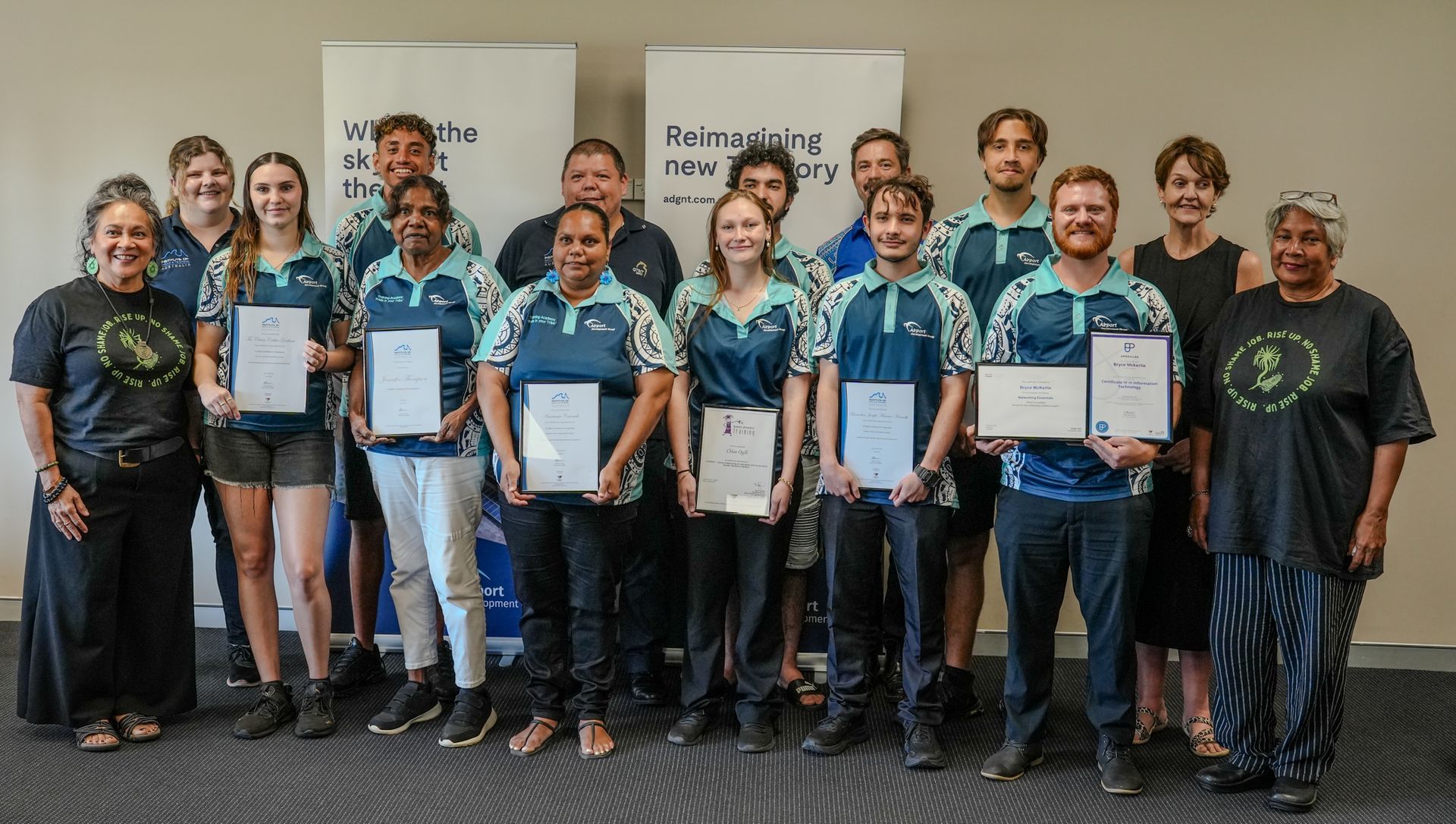
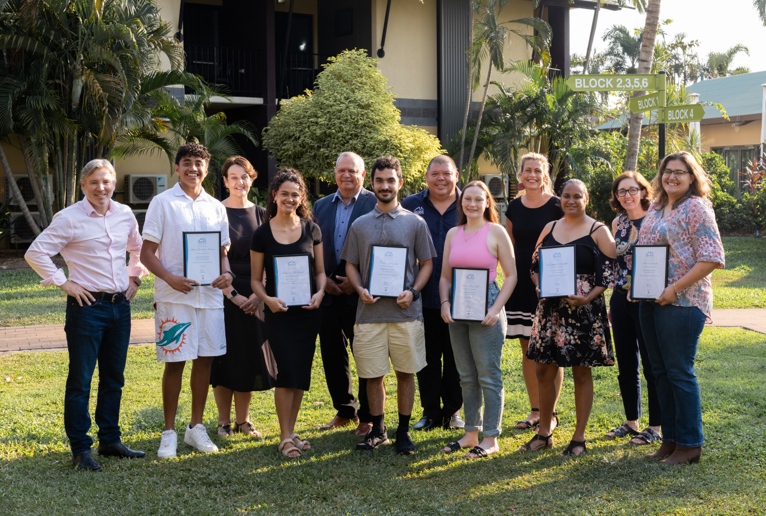
Group of people holding certificates, likely graduates, in front of banners.

Plain-English glossary 

A quick guide to the key terms used above – suitable to publish alongside the figures to help the general public understand them.

Term What it means
tCO₂e Tonnes of carbon dioxide equivalent – the common 'currency' for emissions. It lets different greenhouse gases be added together on a like-for-like basis, since some gases trap far more heat than plain CO₂.
Scope 1 Emissions the airport creates directly – for example, fuel burned in its own vehicles and generators, and gases that leak from air-conditioning and electrical equipment.
Scope 2 Emissions created by the power stations that generate the electricity the airport buys. DIA's Scope 2 is zero because its own solar meets its operational electricity needs.
Scope 3 All other indirect emissions the airport influences but does not control – chiefly aircraft flying in and out, plus tenant electricity, passenger travel to the airport, and waste. This is by far the largest share.
Location-based A way of measuring electricity emissions using the average emissions of the local grid – a standard benchmark.
Market-based A way of measuring electricity emissions based on what the airport actually chose to buy or generate. It rewards investment in renewables – which is why DIA's market-based figure is zero.
LGC Large-scale Generation Certificate. Each one proves that 1 megawatt-hour of renewable electricity was generated. Surrendering (permanently cancelling) LGCs evidences DIA's renewable claim.
ACCU Australian Carbon Credit Unit. Each represents 1 tonne of CO₂ avoided or removed elsewhere. Retiring ACCUs offsets emissions the airport could not eliminate directly.
Offset Balancing out unavoidable emissions by funding an equivalent reduction elsewhere – in DIA's case, an Aboriginal-owned bushfire management project.
Net zero The point where emissions that cannot be eliminated are fully balanced by an equal (or greater) amount of reductions elsewhere. It means net zero – not zero emissions.
Base year The agreed starting point (FY23) against which future emissions are compared to show whether they are going up or down.
Restated A past figure that has been corrected – here, the FY23 baseline was updated to include emission sources originally left out, so year-on-year comparisons are fair.
ACA Level 3 The 'Optimisation' level of the global Airport Carbon Accreditation program, which independently verifies an airport's emissions and reduction efforts.